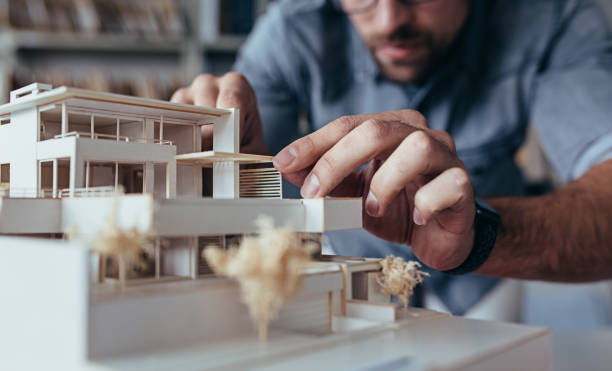
Ask someone to describe a model maker and they’ll often picture a person bent over a table with tweezers and a tiny paintbrush. That’s partly right. But the job is a lot broader than that image suggests. A workshop is part carpentry shop, part design studio, part paint booth and part electronics lab. The people in it need patience, sharp eyes and a surprising amount of problem-solving ability.
Understanding what happens behind the scenes can make you a better client. When you know what’s involved, you ask smarter questions, give better briefs and judge the finished work more fairly. So let’s walk through a workshop and see how the best scale model makers india actually spend their days.
It Starts With Reading Drawings Properly
Every model begins with paper or a screen. Before anyone touches material, a maker studies the plans, sections and elevations to understand the building as a whole. They look for how floors stack, where the roof lines change and how the structure meets the ground.
Reading drawings sounds simple until you try it. Different architects draw differently. Some include every detail, others leave gaps. The maker’s job is to fill those gaps sensibly and ask about anything unclear. This early read-through usually decides whether a project runs smoothly or turns into a chain of corrections.
Tools of the Trade
A modern workshop mixes old and new. You’ll find craft knives, steel rulers, files and clamps next to laser cutters, CNC routers and 3D printers. Each tool has a job. The laser cutter makes clean, accurate walls and floor plates in a fraction of the time hand cutting would need. The router handles thicker materials and contoured bases. Printers deal with shapes that would be painful to carve by hand.
Even so, many of the most important tools are simple. A good pair of tweezers. A sharp blade changed often. A square to keep corners true. Makers tend to be quite particular about their favourites, and a well-used set tells you a lot about a person’s habits.
Choosing Materials Like a Craftsperson
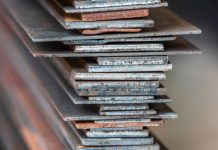
Material choice shapes how a model looks and how long it lasts. Acrylic offers sharp edges and glass-like clarity. Foam board is light and easy to cut, ideal for study pieces. Wood adds warmth and grain. Metals like brass or aluminium can create fine railings and frames that hold up well.
Experienced scale model makers india think about more than appearance. They consider how a material behaves under heat, whether it will warp in humid weather and how it will cope with transport. A model destined for a coastal city may need different treatment from one staying in an air-conditioned office. These choices rarely show in the finished piece, yet they decide whether it still looks good in two years.
The Art of Choosing the Right Scale
Scale is a language that every maker speaks fluently. At 1:200, a window is a tiny mark. At 1:50, you can see frames, sills and even curtains. Moving between scales changes how you build. Details that need careful construction at a large scale become simple painted lines at a smaller one.
This is why a skilled maker thinks about what the viewer needs to notice. A masterplan viewer wants roads, plots and green areas to read clearly. A villa buyer wants to see the terrace, the entry and the garden. Getting the level of detail right is a decision, not an accident.
Making Trees, Water and Landscape Believable
Landscaping is where many models either come alive or fall flat. Cheap trees look like green lollipops, all identical and perfectly round. Better makers vary the sizes, shapes and colours so a street looks like it has grown over years. They use wire, foam, natural materials and paint to create different species.
Water takes thought as well. A pond or river might be built from layered clear resin, painted acrylic or textured glass depending on the effect. Contours for hills are often built up in layers and carefully sanded smooth. Small touches, like a shaded path or a tiny bench under a tree, make people lean in and look closer.
Painting and Finishing
Paint is where hours of work can be rescued or ruined. Spraying needs a steady hand and a clean, dust-free space. Edges must be masked precisely, and colour mixing has to be consistent so the same shade appears across different parts of the model.
Finishing also includes weathering when it’s appropriate. A heritage model of an old fort might have subtle ageing, while a new luxury tower should look crisp and clean. Knowing the difference takes judgement, and it’s why two models built from the same drawings can feel completely different.
Working as a Team
Larger models aren’t built by one person. One worker may handle the base, another the buildings, another landscaping and a fourth the lighting. A supervisor checks consistency across all of it. Good communication inside the workshop is just as important as skill, because small mismatches, like a tower built a few millimetres off, can ruin the whole composition.
Teams also include people who work with software, preparing files for cutting and printing. As models get more complex, this digital side keeps growing, and the best makers are comfortable in both worlds.
How to Brief a Maker Effectively
You’ll get the best results by being clear and a little generous with information. Share complete drawings, the intended scale and size, the purpose of the model and where it’ll be shown. Mention any colours, materials or styles you like. If you have photographs of models you admire, send them.
Be honest about your budget and deadline too. Makers can’t solve problems they don’t know about. If money is tight, they might suggest dropping a detail or using a simpler base. If time is short, they can plan the workflow around it, but only if they know.
What Makes a Maker Worth Returning To
Plenty of workshops can produce a decent model. The ones clients come back to share a few habits. They keep promises about dates. They report problems early rather than hiding them. They treat other people’s projects with the same care as their own. And they take pride in the small details nobody asked for, like making sure the underside of a base is neat.
If you meet a maker like that, hold on to them. Over time they learn how you think and what your projects need, which saves effort on both sides.
Looking After Your Model After Delivery
A finished model is more fragile than it looks. Dust is the biggest enemy, followed by sunlight, which fades paint and yellows some plastics over time. Keep the model under a clear cover if it will sit in an open space, and avoid placing it near a window or a strong spotlight.
For cleaning, a soft brush and a gentle blast of air from a small blower are usually enough. Never use household cleaners on acrylic, because many of them leave cloudy marks. If a tree or a car gets knocked off, don’t panic. Most small parts can be re-glued, and a good maker will tell you which glue to use. Keep the workshop’s contact details handy for bigger repairs.
Common Misunderstandings About This Work
Some ideas about model making persist even though they aren’t true. One is that a model is just a smaller copy and so should cost much less than the real thing. In fact, tiny detail takes enormous effort. Another is that a bigger model automatically looks better. Often a well-judged smaller one reads more clearly. And a third is that machines do everything now. They help a lot, yet they can’t replace the eye of an experienced person.
Clearing up these ideas early helps conversations with makers go well. When both sides share the same expectations, the project moves faster and the result is usually stronger.
Why Patience Pays Off
Anyone who has watched a model come together knows how many quiet hours sit behind it. Glue needs to dry properly. Paint wants thin coats with rests in between. Rushing any of this shows up later as cracks, stains or soft edges. When a maker asks for a few extra days, it’s worth listening. A short delay at the right moment often protects weeks of earlier work.
Closing Thoughts
Model making is a craft that rewards patience. Behind every convincing little building is a person who measured twice, cut carefully and fixed a dozen tiny problems nobody will ever notice. When you commission a model, you’re really paying for judgement as much as for materials and machines.
Take the time to find skilled scale model makers india whose past work you admire and whose way of working suits yours. Talk to them honestly, give them a proper brief and trust their expertise. The reward is a model that looks right from every angle, and one that people will want to photograph, touch and talk about long after the presentation is over.