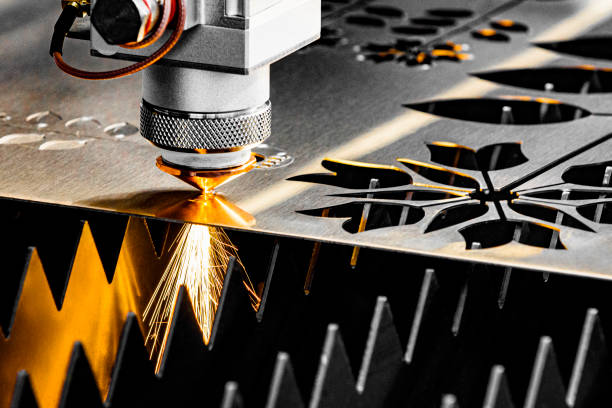
Engineered parts that used to take weeks of tooling can now be shaped in hours with advanced machining methods. Businesses that rely on complex components are turning to shops equipped with multi-axis technology because the results are faster, more accurate, and ready for modern production demands. The shift has quietly changed what a CNC machine company can offer across industries that depend on precision.
Complex Contour Shaping for Intricate Part Geometries
Multi-axis systems excel at cutting curves, tapers, and flowing surfaces that once required manual polishing. These machines operate with three, four, or even five axes of movement, allowing tool paths to wrap smoothly around complicated part designs. For manufacturers, that means turbines, orthopedic implants, and aerospace fittings can be crafted in a single run instead of multiple setups.
The precision offered by this method reduces human error and ensures consistency across production lots. Multi-axis shaping also shortens lead times, which directly supports industries where downtime costs millions. Unlike older methods that demanded extensive manual adjustment, a modern CNC plasma cutter or milling setup achieves these geometries with software-driven accuracy.
High Repeatability Across Medium and Large Production Runs
Manufacturers place high value on repeatability, particularly where thousands of identical parts are required. Multi-axis machining is engineered for this demand, producing exact duplicates regardless of batch size. Once the program is dialed in, each cycle matches the first, providing confidence that parts will meet quality requirements without constant adjustment.
Repeatability also reduces scrap rates, which helps manufacturers save material costs while maintaining delivery schedules. For businesses searching “CNC companies near me,” this ability to scale production while holding tolerances tight is a deciding factor. A CNC machine company that masters repeatability can support both small-batch prototyping and the transition to high-volume orders without compromising precision.
Integrated Inspection Processes Ensuring Consistent Compliance
Inspection is no longer an afterthought in modern machining. Multi-axis equipment often integrates probing systems that verify dimensions mid-cycle. These real-time checks allow operators to catch deviations before they become costly defects, ensuring compliance with strict industry standards.
The advantage grows even more in regulated sectors like defense, medical, and aerospace. By embedding inspection within the process, shops ensure every part that leaves the machine aligns with drawings and certifications. This eliminates rework, strengthens compliance records, and saves customers from delays.
Versatile Material Handling from Aluminum to Exotic Alloys
Material choice shapes performance, but not all metals are easy to machine. Multi-axis setups allow smoother transitions between aluminum, stainless steel, titanium, and even nickel-based alloys. This flexibility means customers are no longer restricted by what can be cut but can instead choose the best material for strength, heat resistance, or weight reduction.
With stronger spindles and rigid tool paths, these machines maintain stability even on exotic alloys that stress traditional cutters. For industries building medical implants or jet engine components, this flexibility proves invaluable. It opens the door to new designs that weren’t practical before multi-axis technology became common in advanced shops.
Reduced Setup Requirements for Multi-feature Components
Traditional machining required separate setups for each feature, including drilling, milling, contouring, and finishing. Multi-axis machines consolidate those steps into one fixture, greatly reducing setup times. This reduces operator involvement and eliminates errors caused by moving parts between machines.
For components that carry multiple features—such as housings with drilled holes, tapped threads, and milled pockets—multi-axis machining transforms workflow efficiency. Reducing setup requirements lowers costs, speeds delivery, and creates consistency across batches. Businesses that might once have needed three or four machines to finish a part now achieve the same result in one continuous cycle.
Precision Threading and Tapping on Nonstandard Surfaces
Threading and tapping often present challenges on curved or angled surfaces. Multi-axis machining solves this by aligning tools at precise angles, ensuring clean threads even on unconventional geometries. The result is stronger assemblies, since the threads align properly with fasteners and distribute loads evenly.
This capability is especially important in industries such as oil and gas, where equipment faces constant stress and safety cannot be compromised. Rather than relying on secondary operations or manual finishing, shops with advanced machines can deliver threaded components ready for immediate integration. In certain cases, a plasma cutter may also be paired with multi-axis setups to prepare surfaces before threading operations, adding another layer of versatility.
Seamless Transition from Prototype Refinement to Volume Output
One of the hidden advantages of multi-axis technology lies in its ability to scale projects from prototype to production without delays. Once a part design is proven, the same machine can quickly adjust programming for larger runs. This eliminates the need to retool or outsource production, saving both time and money.
For product developers, the ability to refine a prototype and then move directly into volume output reduces the risk of errors during scale-up. The same tolerances proven in the prototype carry over into final production. This capability ensures consistency from first concept to final shipment, which strengthens trust between manufacturers and their customers.
Consolidated Machining Steps Minimizing Part Handling
Each time a part is handled, the risk of damage or dimensional shift increases. Multi-axis machines reduce this risk by combining cutting, drilling, finishing, and inspection steps within one continuous operation. Fewer transfers mean fewer opportunities for mistakes.
By consolidating steps, production times shrink and part accuracy improves. This approach creates leaner workflows, allowing CNC companies near me to keep costs competitive while meeting demanding delivery schedules. For industries where precision and speed must align, this streamlined handling represents one of the most impactful capabilities of modern machining.